Care · Cleaning
How to clean artificial grass
Even the best artificial grass needs a thorough clean every few years. Here's what you can do yourself — and what's better left to professionals.
Regular maintenance prevents most problems. But if you've left it too long, or the surface has been used intensively, a thorough clean becomes necessary. Moss, algae and compacted infill cannot be removed with a garden hose — they require a proper approach.
When does artificial grass need cleaning?
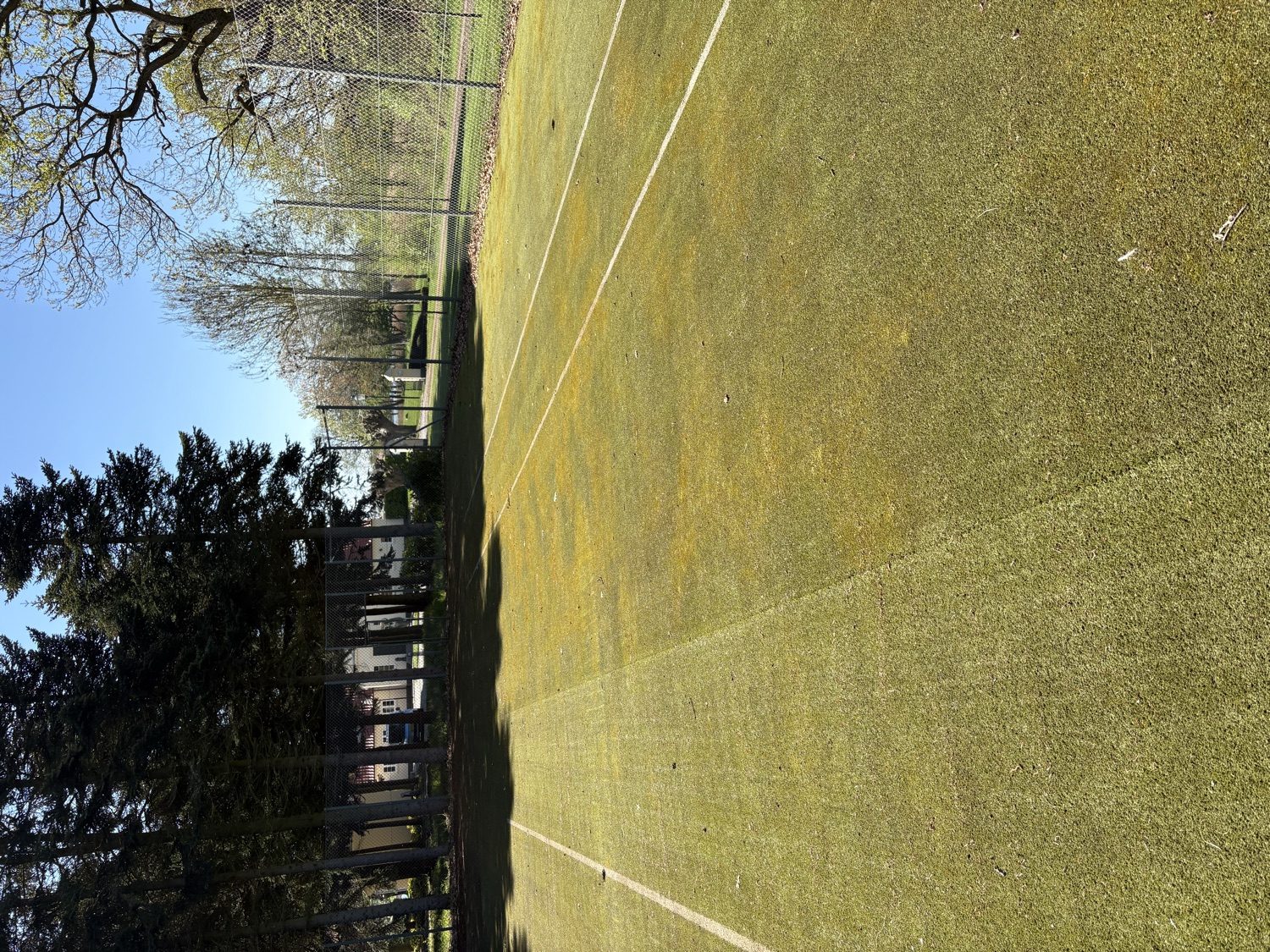
Look for these signs: visible moss growth (green or black patches), algae on the surface, flattened pile that won't lift again after brushing, a compacted and hard base layer, or persistent odours that don't disappear after rinsing.
As a general rule: professional cleaning is recommended every 3–5 years with normal use. Intensively used surfaces (dogs, commercial installations) may need it more frequently.
Preparation before cleaning
Remove all loose items: furniture, plant pots, toys. Use a leaf blower to clear leaves and light organic material.
Inspect for mechanical damage (loose edges, cracks in the backing) before you start — cleaning with high pressure on a damaged surface makes the damage worse.
Biological cleaner: application and dosage
Choose a cleaner based on potassium bicarbonate or sodium percarbonate — both are effective against moss and algae, and are pet-safe, non-toxic and biodegradable.
Apply as a solution (follow the manufacturer's instructions), distribute evenly with a watering can or sprayer. Leave for 20–45 minutes. Rinse thoroughly with a garden hose — not a pressure washer.
Mechanical cleaning: when is it necessary?
For compacted infill and flattened pile: mechanical cleaning with rotating brushes is required. Professional equipment (a dedicated artificial grass cleaner) rotates fingers deep into the pile and loosens compacted sand and organic material.
DIY version: a stiff deck scrubber or a stiff handheld brush can do some of the work, but is not effective at scale.
Topping up infill after cleaning
A thorough clean removes some of the infill sand. Top up with fresh silica sand (0.5–1 mm) as needed — typically 1–3 kg/m² after a deep clean.
Use a garden broom to brush the infill down into the fibres. Finish with a thorough brushing against the pile direction to lift the fibres.
When is it time for professional cleaning?
Signs that you should call us: heavy moss or algae covering >20% of the surface, a base layer that is black or hard and compacted, or turf that looks worn and flat despite cleaning attempts.
We have equipment that goes deeper than the average DIY effort — and we will give you an honest assessment of whether a clean is worthwhile, or whether the area is ready for replacement.
Prevention
The best clean is the one you never need. Brush monthly, rinse regularly, remove leaves weekly and ensure good drainage. This prevents 80–90% of all cleaning requirements.
Download as PDF
Complete guide — ready to print or use offline
We're happy to answer questions directly
If anything in the guide is unclear, or you have a specific question about your project — give us a call. We're tradespeople, not salespeople.
Want us to handle the installation?
We offer complete installation — base preparation, laying and finishing. Contact us for a quote.