Pets · Care
Artificial grass for dogs and pets
Artificial grass and dogs can work very well together — but a few things determine whether it stays that way for 15 years.
Many people assume artificial grass and dogs are a bad combination. They're not — but there is a difference between artificial grass that's genuinely designed for the purpose, and grass that's simply labelled "pet-friendly". This guide tells you exactly what to look for.
Drainage is everything
Dog urine is the biggest challenge for artificial grass. It needs to pass through the backing and drain away — otherwise ammonia concentrates and creates odour.
Always choose artificial grass with a perforated backing (minimum 30 holes per 100 cm²) or a fully drainable backing. Combine this with a drainable sub-base — hardcore or porous asphalt — not compacted soil that blocks drainage.
Pile height and fibre type for dogs
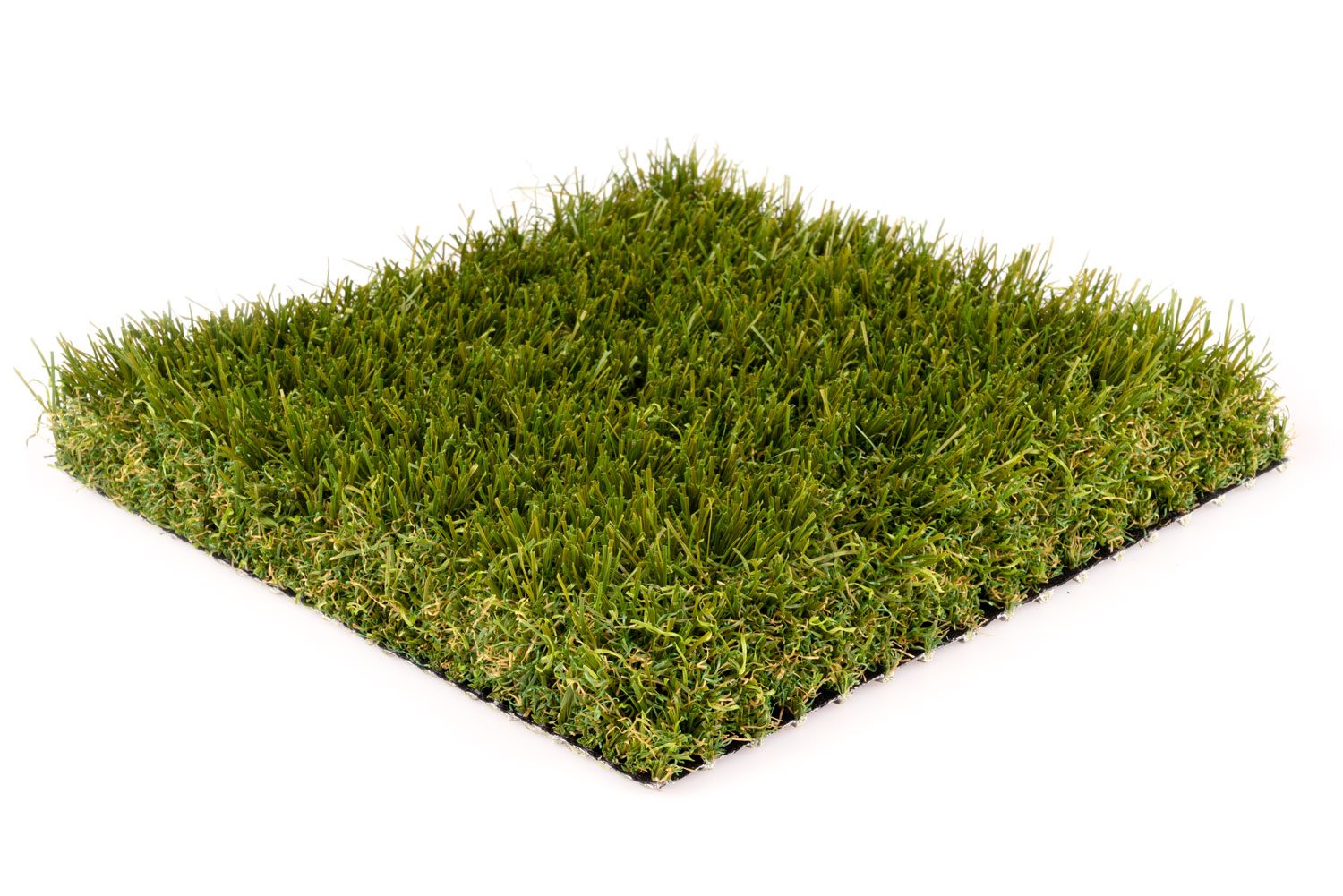
Shorter pile (25–35 mm): easier to clean, the fibres don't trap organic material in the same way as long fibres. Monofilament fibre is preferred over fibrillated — it sits more densely and is easier to rinse clean.
Choose a dense tuft count (> 14,000 tufts/m²) — this gives a harder, more wear-resistant surface for dogs that run, dig and turn sharply.
Infill for pets: zeolite over rubber
Standard rubber crumb infill is not suitable for dog grass — it absorbs odour and then releases it again.
Zeolite infill (a natural volcanic mineral) is the best choice: it binds ammonia chemically and does not release it again. Can be replaced after 3–5 years. Silica sand is an acceptable alternative — readily available and easy to clean.
Daily and weekly cleaning
Daily: rinse the area your dog uses most with a garden hose. Two minutes' work — eliminates odour before it sets in.
Weekly: use an enzymatic cleaner (biologically breaks down ammonia and urea). Apply, leave for 10–15 minutes, then rinse thoroughly.
Monthly: brush and check for accumulated organic material.
Allergies, safety and chemicals
Make sure the artificial grass has been tested for heavy metals and harmful chemicals (CE-marked, REACH-compliant). Cheaper products sometimes use lead-based pigments and other substances that are problematic for dogs that chew grass.
All products from Kunstgræsfabrikken are manufactured in Europe in compliance with EU chemical regulations.
Resistance to claws and biting
Dogs that dig require a product with a high dtex (8,800+) and a robust backing system. Choose backing with at least two layers of fibreglass reinforcement.
If in any doubt — contact us. We know the difference between "pet-friendly in the brochure" and "pet-friendly in practice".
Temperature in summer
Artificial grass can get warm in direct sunlight — 10–20°C warmer than the surroundings. For dogs out in summer heat: choose lighter colours and shorter pile, and make sure there is shade available.
Rinse with cold water on hot days before the dog uses the area — it cools the surface down within a few minutes.
Download as PDF
Complete guide — ready to print or use offline
We're happy to answer questions directly
If anything in the guide is unclear, or you have a specific question about your project — give us a call. We're tradespeople, not salespeople.
Want us to handle the installation?
We offer complete installation — base preparation, laying and finishing. Contact us for a quote.