Buyer's guide · Product selection
How to choose the right artificial grass
Pile height, dtex, monofilament, PE — what does it all actually mean? And which type suits your particular purpose?
All types of artificial grass look similar from a distance. They don't from up close — and they don't perform the same either. This guide explains the key parameters so you can choose the product that fits your purpose, your budget and your life.
Pile height: what suits your purpose
Pile height is measured in mm and is one of the most important parameters. In brief: a higher pile gives a lusher, more garden-like look — but is harder to keep upright and requires more infill.
10–15 mm: Putting green. Sharp, fast roll — no infill.
20–25 mm: Chip & putt areas, tee grass.
25–35 mm: Terrace and patio. Dense and elegant, resembles a neatly mown lawn.
35–45 mm: Garden grass, the most popular segment. Lush and natural — for relaxation, not golf.
45–55 mm+: Ultra-realistic landscaping look. Requires good infill management.
Dtex: fibre thickness in numbers
Dtex is a textile measurement — grams per 10,000 m of fibre. The higher the dtex, the thicker and more robust the individual fibre.
6,000–7,500 dtex: light, soft fibre. Good for low-traffic areas and decorative lawns.
7,500–10,000 dtex: standard garden use. Good balance between softness and durability.
10,000+ dtex: sport and high-traffic. Very robust — used for sports surfaces, dog areas and paths.
Tip: dtex alone doesn't tell the whole story — fibre density (number of tufts per m²) is at least as important.
Monofilament vs. fibrillated fibre
Monofilament (solid round fibre): robust, wear-resistant, good for sport and putting greens. Can feel slightly firmer.
Fibrillated (split fibre): softer and more natural feel, but slightly less durable over time. Popular for garden grass.
Twisted combination fibres (mono + fibril): the best of both worlds — used in premium garden products.
Materials: PE, PP and PA
PE (polyethylene): soft, UV-stable, used in over 90% of garden grass. The best choice for outdoor use.
PP (polypropylene): cheaper, stiffer, not UV-stable. Only suitable for temporary use (events, exhibition stands).
PA (polyamide/nylon): the most durable fibre. Used for sports and golf surfaces. More expensive than PE.
Our recommendation for gardens: always PE — it retains colour and softness for 15+ years.
UV stability and durability
Always look for "UV-stabilised" in the product specification. This means the colour pigments are mixed into the fibre — not just applied to the surface.
Use Xenon-arc test results (ISO 4892-2) as a comparison basis: 1,000+ hours = good, 2,000+ hours = excellent. Products without documented UV testing typically fade noticeably within 3–5 years.
Colour, natural appearance and thatch
A single shade of green alone gives an unnatural look. Good products blend at least two or three green tones — from light lime to dark olive.
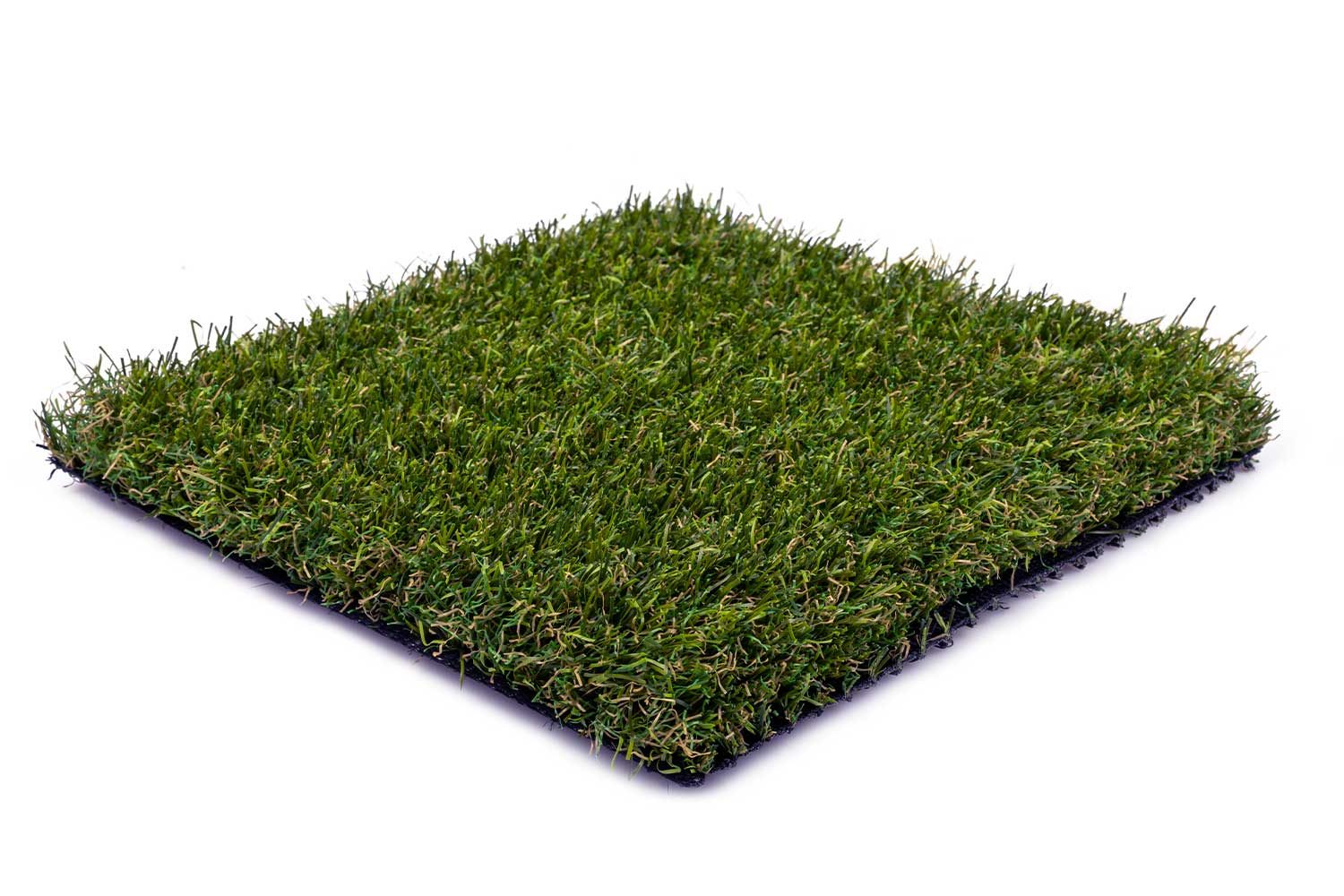
Thatch layer: brown and beige "dead" fibres woven into the base layer imitate naturally withered grass and give the most realistic result. Our recommendation: always choose a product with a thatch layer if natural appearance matters. Without thatch it quickly looks plastic.
Download as PDF
Complete guide — ready to print or use offline
We're happy to answer questions directly
If anything in the guide is unclear, or you have a specific question about your project — give us a call. We're tradespeople, not salespeople.
Want us to handle the installation?
We offer complete installation — base preparation, laying and finishing. Contact us for a quote.